In a society that’s always on the go, restorative yoga is gaining popularity due to its serene and passive nature. Restorative yoga stimulates the parasympathetic nervous system, which enables us to rest, digest and heal. I’ve found that practicing restorative yoga with a chair can help immensely with tapping into this relaxing practice nearly anywhere I am: the office, the airport, anywhere that has a chair. This restorative yoga sequence focuses on using a chair, but you can also incorporate other yoga props such as a bolster, blankets, and blocks to help support you even more.
How to Practice Restorative Yoga with a Chair: 4 Relaxing Poses
1. Seated Child’s Pose (Balasana)
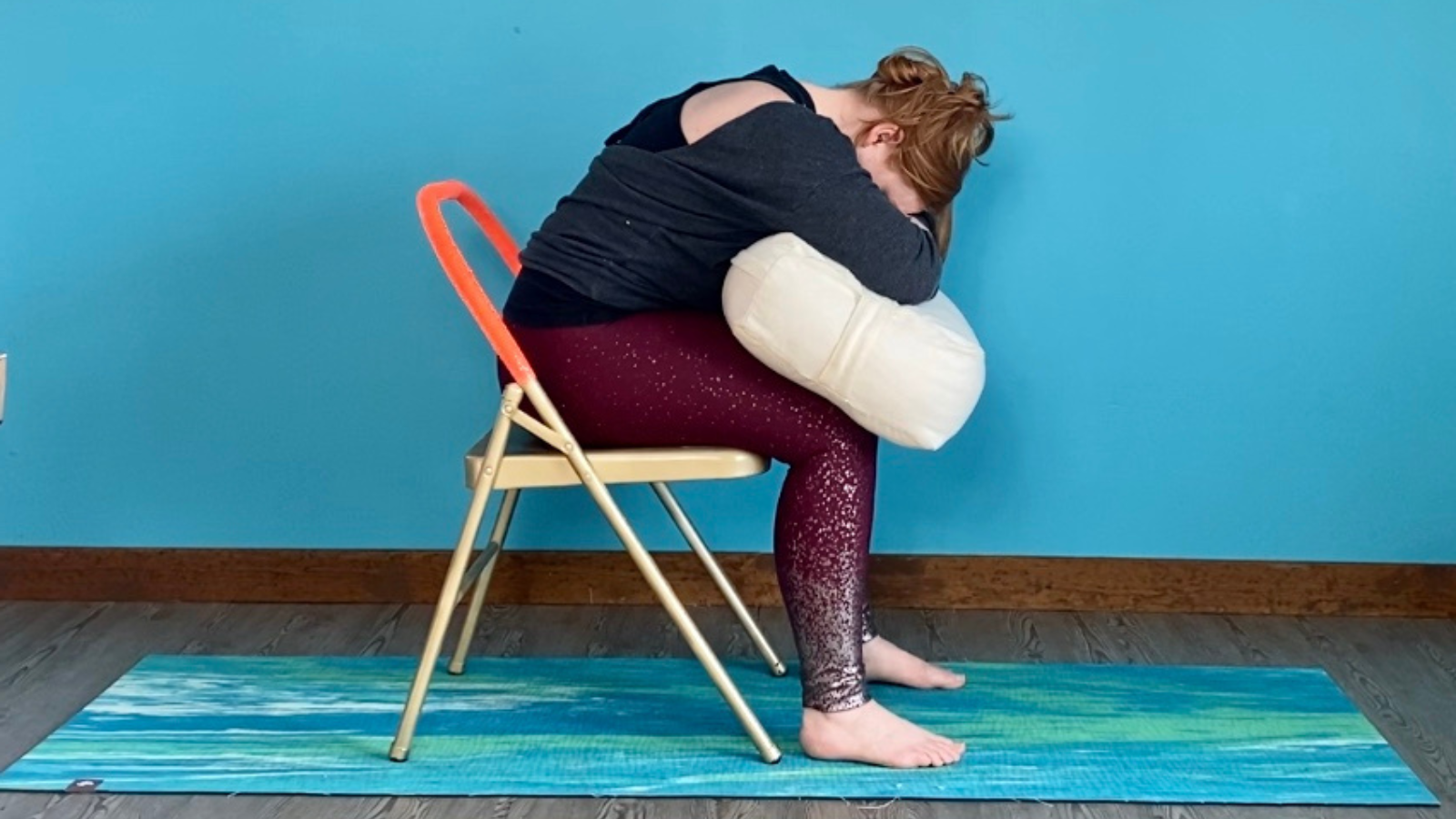
Child’s Pose isn’t the most relaxing pose for me since it requires a great deal of hip and knee flexion, which I do not always have. However, when I practice restorative yoga with a chair, I can connect more soundly with some of the pose’s attributes that I often hear: grounding, soothing, a resting posture.
- Sit in a chair with your feet a comfortable distance apart and on the floor.
- Place a bolster/pillow/folded blanket over your lap and rest your head on the support of choice.
- Rest your arms over the support or over your legs. Let your fingertips drape down toward the floor, like a curtain hanging from a rod. You can also opt to fold your hands and place your forehead over your hands so that your neck can remain neutral rather than turning your head from side to side.
- Rest here for 2 to 5 minutes.
- To come out, place your hands on your bolster or thighs, and slowly lift your torso upright. Give yourself a few moments before moving on to the next pose.
2. Supported Seated Wide-Angle Pose (Upavistha Konasana)
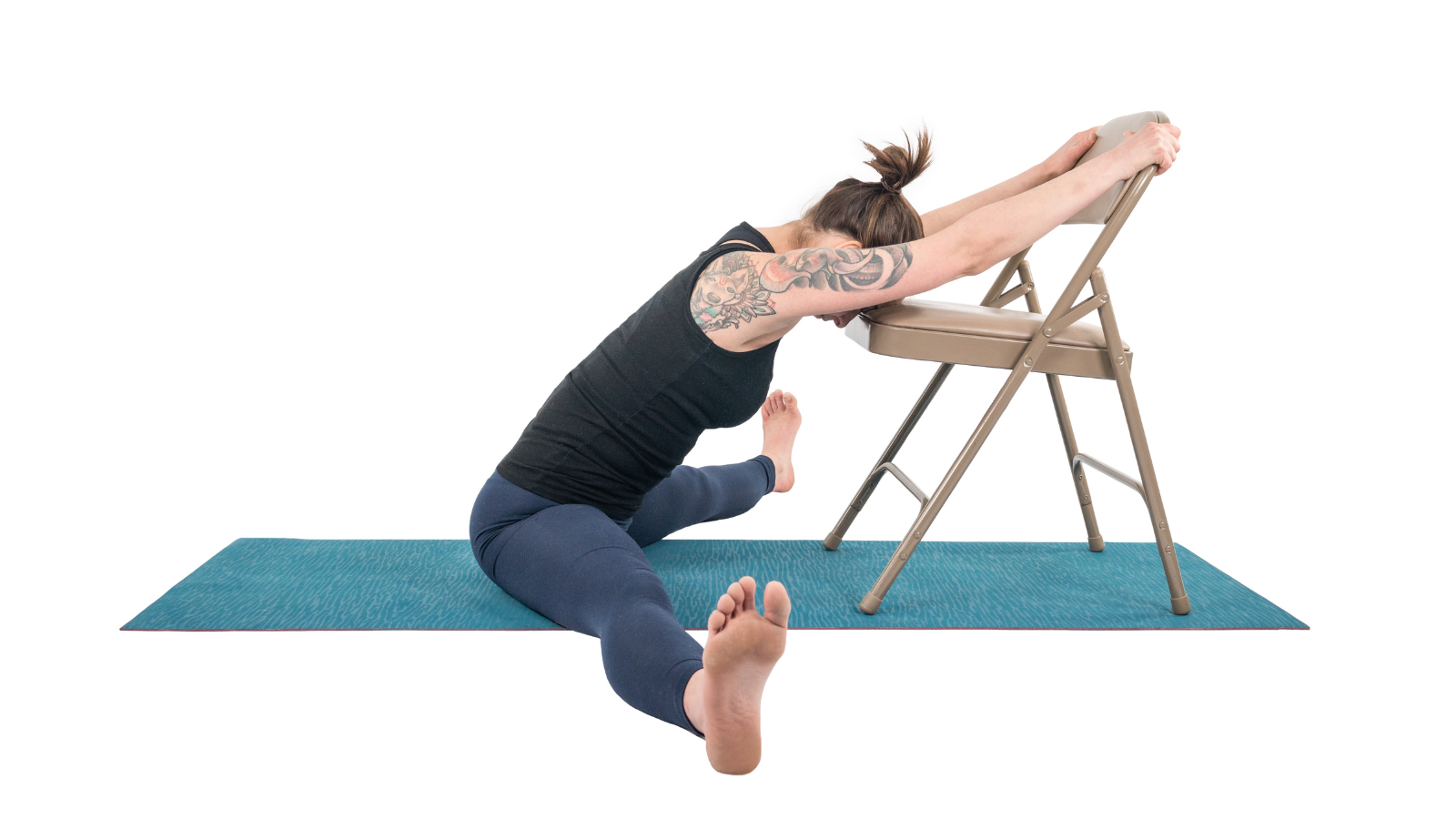 Upavista Konasana or seated wide-angle pose is a deep forward bend that stretches the hamstrings and adductor group. With a chair, you can lift the height of the floor to rest your head rather than trying to reach your chest to the floor. This makes this version of Upavista Konasana more accessible.
- Sit with your legs separated at a 90-degree angle or more in front of your chair. Sit either on the floor or on a prop such as a folded blanket or bolster. This can facilitate an anterior tilt in your pelvis to keep your sacroiliac joint and spine in a neutral position.
- Press your hands on the chair seat to elongate your spine.
- Hinge forward from your hip joints.
- Then, place your forehead on the chair or your hands as you did in the previous pose. If your chair seat is a hard surface, place a folded blanket over the edge for comfort. You can also place your hands on the floor or support your arms on the chair seat.
- Rest here for 2 to 5 minutes. Then use your hands to slowly lift your torso, lifting your head up last.
The variation shown below adds a bolster for a different method of support.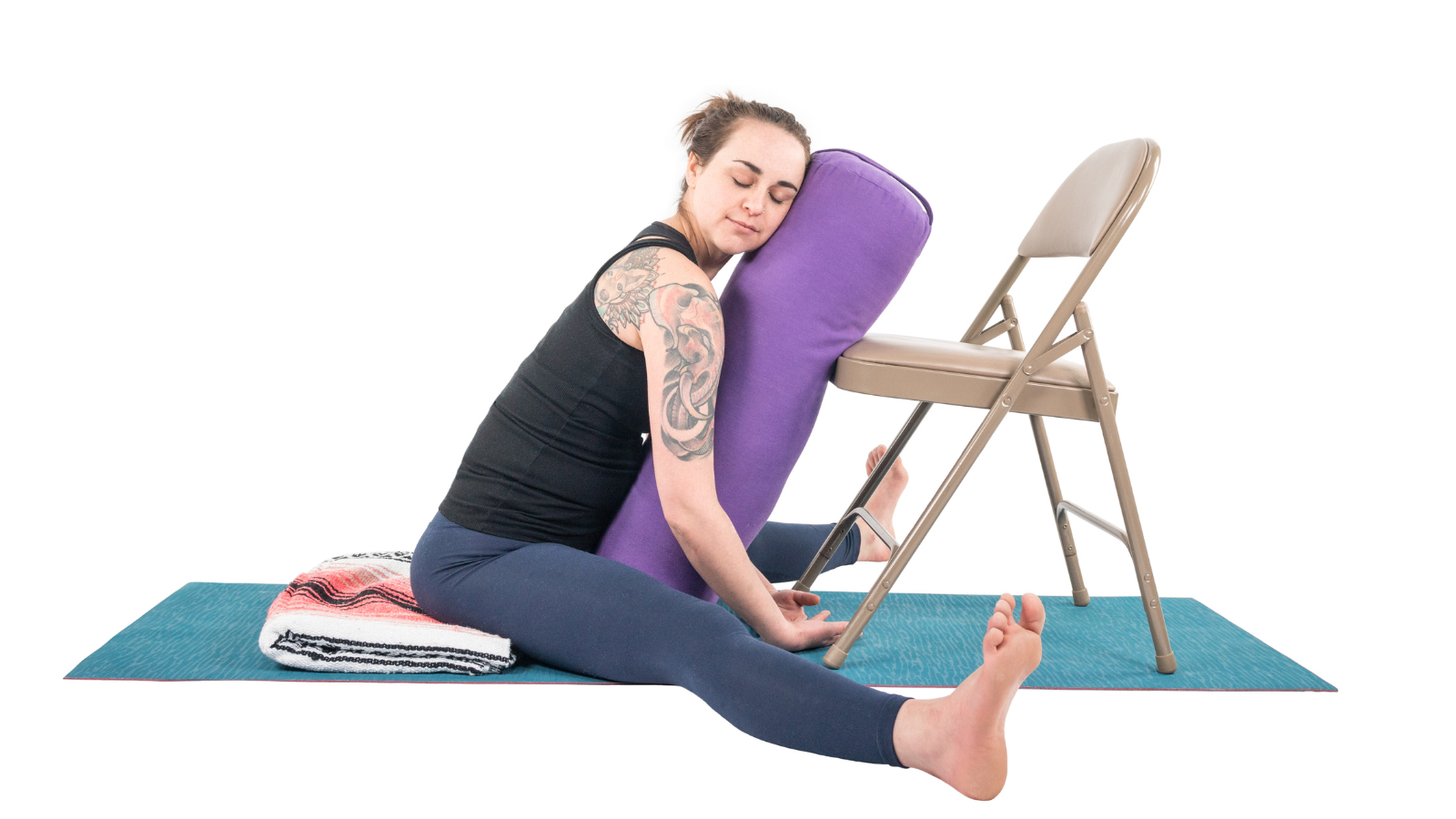
3. Reclining Bound Angle Pose (Supta Baddha Konasana) on a Chair
Supta Baddha Konasana is often taught in a supine position with the feet on the floor. This restorative yoga variation with a chair elevates the feet, which makes it more of an inversion, and uses gravity to help lengthen the lower spine and stretch the adductor group.
- Keep the chair in the same orientation as the last pose.
- Lie on your back and place your feet on the chair. If this is uncomfortable or you feel unsupported, try placing a folded blanket or bolster under your hips.
- Place the outer edges of your feet together so that the soles of your feet spread when you let your knees move toward the chair seat.
- Place your hands anywhere that feels comfortable.
- Stay here for 5 to 15 minutes.
- To exit this pose, use your hands to draw the knees together and place your feet on the chair.
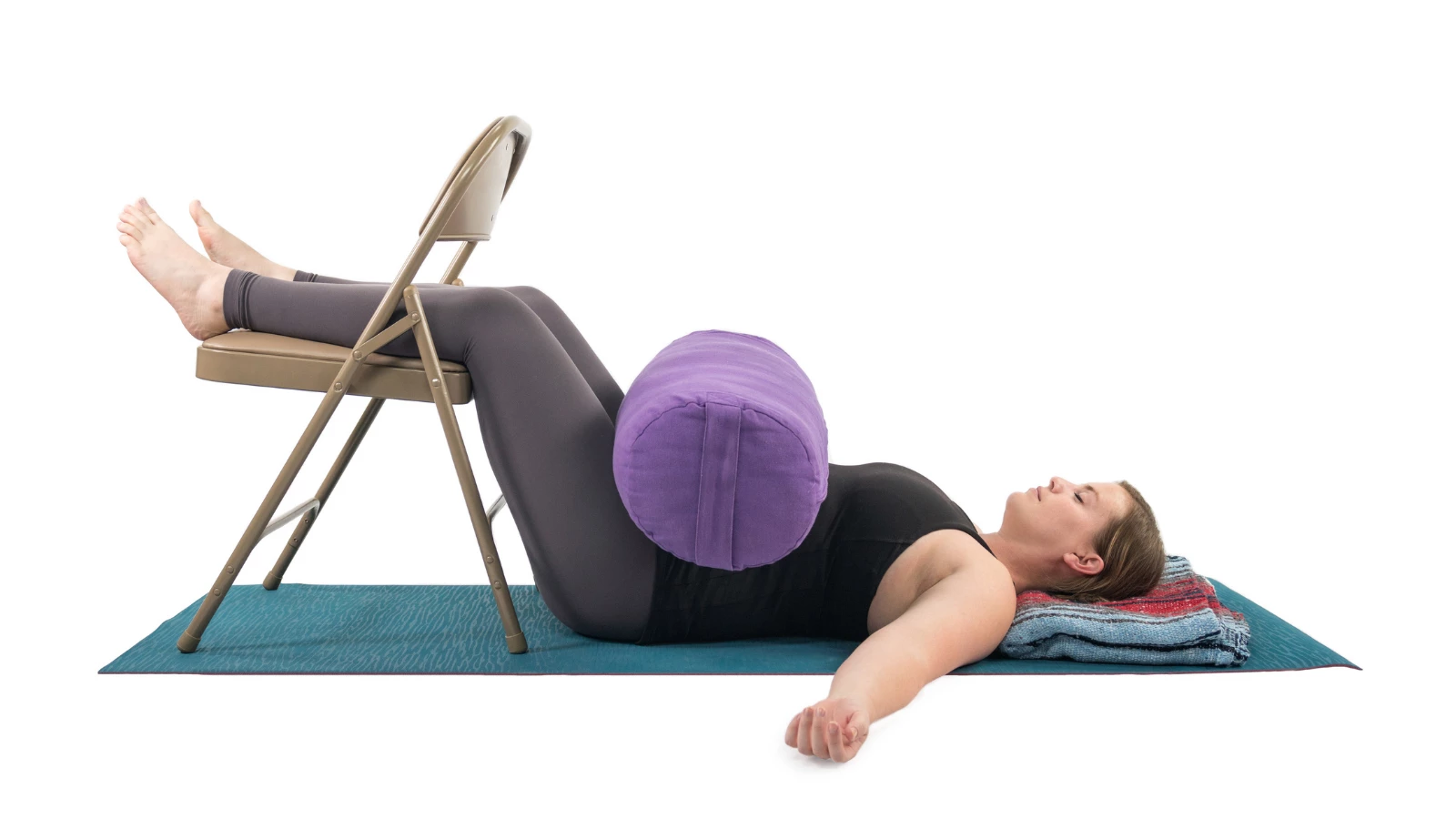
4. Legs Up the Chair (Ardha Viparita Karani)
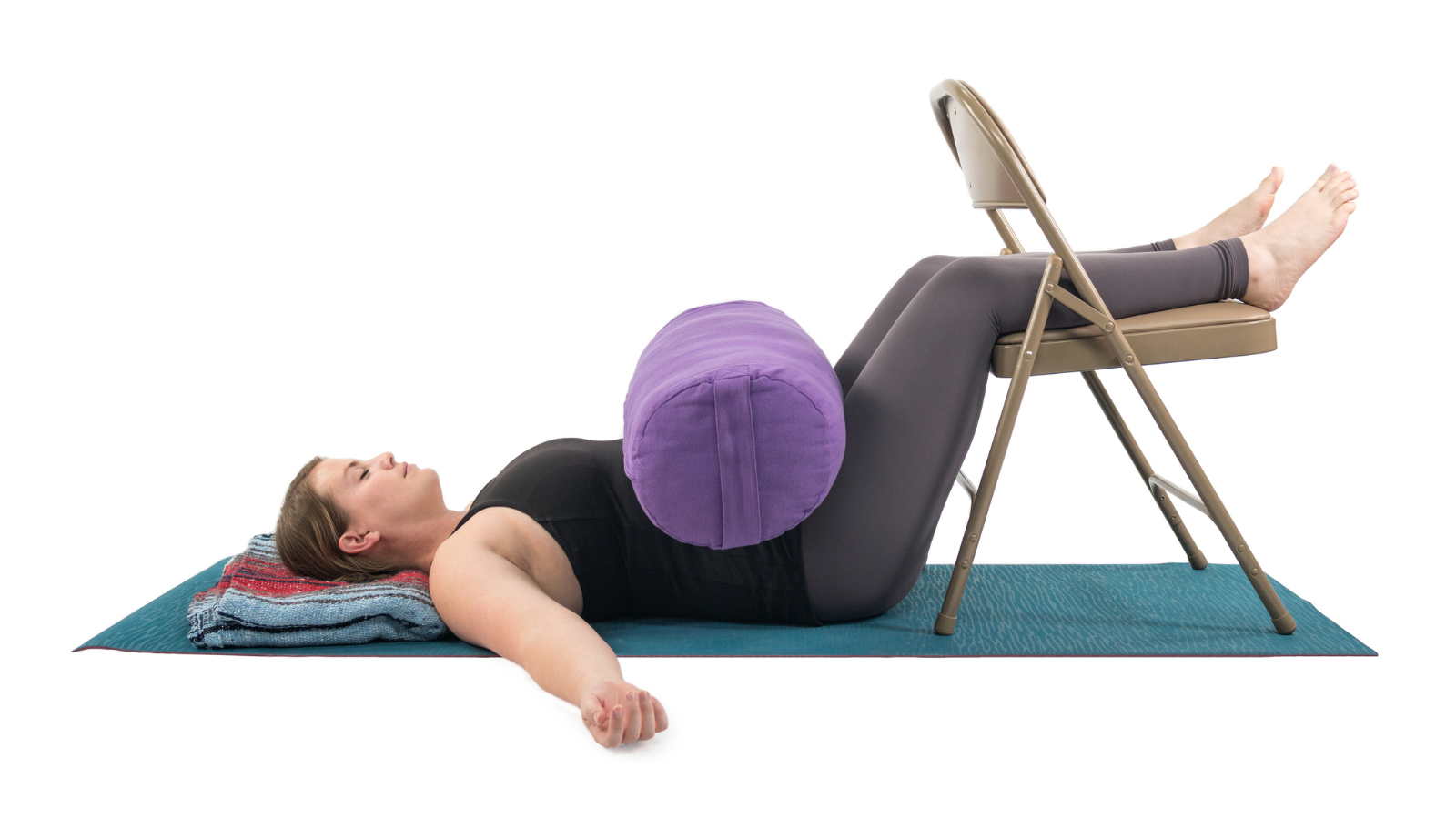 After a long day on my feet, legs up the chair (instead of the wall) is my favorite pose to practice. It also flows nicely from the previous pose.
- From exiting Supta Baddha Konasana, place your calves on the seat of the chair so that your knees are at approximately a 90-degree angle. Make sure your knees and calves are supported by the chair.
- You can choose to have support under your hips or not.
- You may also want to support your head so that the chin is slightly lower than the forehead. This position is conducive to stimulating the parasympathetic nervous system.
- Stay here for 5 to 15 minutes.
- Then, pull your knees into your chest and rock side to side.
- When you are ready, roll to one side and rest there for a few minutes before ending this practice.
Restorative yoga has the reputation of using a ton of props. In restorative yoga with a chair, you can use minimal props and still have a profound experience of relaxation.